Buyer's guide · Updated quarterly
The best AI consulting firms for manufacturing in 2026
An analysis of ten firms that help manufacturers adopt AI, compared on seven published criteria, with the evidence behind each one and the established path to a first project.
Contents
In brief
There is no single best AI consulting firm for manufacturing. The right one depends on where the work is: in the office around the plant, on a specific line, or across a network of plants. For a mid-sized manufacturer that wants results within a year, these are the strongest fits.
- Office operations: OpenLazarus. AI teammates with their own email and phone handle quotes, purchasing and supplier follow-up alongside your ERP.
- One defined use case: Addepto. A build team with a named manufacturing case and a clear path from discovery to support after go-live.
- Inspection on the line: Sciotex. Designs and installs the cameras, lighting and models, not just the software.
- Deciding where to start: TriVista. A two-day workshop that ends in a 90-day plan.
- Multi-plant programs: Accenture Industry X. Named, quantified network-wide work with Unilever.
The decision manufacturers face
Most manufacturers now face the same question: where AI will improve the operation, and who should help them get there. The question is harder than it looks. Adoption is still uneven. In Deloitte's 2025 survey of 600 large US manufacturers, 29% used AI or machine learning at facility or network scale and another 23% were still piloting it1.
Many pilots never reach production. MIT's 2025 study of enterprise deployments found that most generative AI pilots showed no measurable effect on profit and loss. Projects run with specialized vendors or partners succeeded about 67% of the time, while internal builds succeeded about a third as often2. That study covers all industries, but the pattern matches what manufacturers describe: a promising demonstration, followed by a long gap before anything changes on the floor or in the office.
The market for outside help is also hard to read. None of the nine consulting firms we reviewed publishes its rates, and only three publish case studies that name a manufacturing client. Most pages that rank the firms are written by one of the firms, with itself in first place and no stated method.
How we evaluated the firms
We reviewed ten firms that offer AI services to manufacturers: global integrators, strategy firms, AI specialists, engineering boutiques and one platform. Each was assessed on the same seven criteria, using only what the firm publishes and what reputable third parties report. Every claim in this guide links to its source with the date we read it. The criteria and rules are set out in full on the methodology page.
The ranking reflects one common situation: a manufacturer with roughly 50 to 2,000 employees, a working plant, a lean office and no in-house data science team, that wants a measurable result within a year. A firm that ranks lower here can still be the right choice for a different situation, and each entry says when that is the case.
The ten firms, ranked
1. OpenLazarus
AI operations platform
Best for: Manufacturers that want AI teammates to run the office work around the plant: quotes, purchasing, supplier and customer mail, phones and quality paperwork.
OpenLazarus is a company-owned operating system with AI teammates that each have an email address and phone number, plus a yearly AI-Architect engagement. Its manufacturing page describes quote, job, machine, material and quality modules that sit alongside an existing ERP.
2. Addepto
AI specialist
Best for: Mid-sized and large manufacturers that want a hands-on build team for one or two defined use cases, such as inspection or maintenance.
Addepto is a mid-size AI and data engineering firm. For manufacturers it builds predictive maintenance on sensor data connected to CMMS, SCADA and ERP, computer-vision inspection, demand forecasting, scheduling optimization and digital twins.
3. Sciotex
Engineering boutique
Best for: Plants that need a working inline inspection or counting system on the line, not a strategy document.
Sciotex is an engineering firm that designs and builds physical industrial AI systems: visual inspection, part counting and sorting, robotic inspection and handling, analysis of automated-test data and machine monitoring. It supplies the cameras, lighting, compute and integration as well as the models.
4. TriVista
Operations consultancy
Best for: Mid-sized manufacturers at the start, who want help choosing and sequencing use cases with their ERP and MES in mind.
TriVista is an operations and technology consultancy. For manufacturers it offers AI opportunity assessments, data-readiness reviews, use-case design, pilot evaluation and adoption support, alongside its ERP and operations-improvement work.
5. Capgemini
Global integrator
Best for: Manufacturers with engineering-heavy products that want AI inspection or plant optimization built and scaled by a large integrator.
Capgemini’s Intelligent Industry offer covers intelligent manufacturing and supply chain, connected products and digital continuity between engineering and operations. Its published client stories include AI visual inspection on edge devices and data and AI platforms for plant optimization.
6. Accenture Industry X
Global integrator
Best for: Large multi-plant manufacturers that want one partner for AI, digital twins, automation and the OT/IT integration behind them.
Accenture’s Industry X unit covers digital production and operations, asset management, digital engineering including digital twins, automation and robotics, and connected products. It works with partners such as AWS, Microsoft, NVIDIA, SAP, Siemens, Dassault Systèmes and AVEVA.
7. Deloitte Smart Manufacturing
Global integrator
Best for: Large manufacturers that want AI tied into MES, ERP and quality systems, with managed services after go-live.
Deloitte’s smart manufacturing practice spans manufacturing engineering, automation, quality, maintenance and MES implementation. Its AI assets include the IntelligentOps platform for downtime, quality and workforce productivity, a maturity assessment called Compass, and computer-vision analytics.
8. Tredence
AI specialist
Best for: Manufacturers with an established cloud data platform (Databricks, Snowflake or Azure) that want production machine learning delivered by a specialist.
Tredence is a data science and AI services firm with an industrials practice covering IT/OT data platforms, quality prediction, supply-chain control towers and agent-based “command center” tools for manufacturing, S&OP and field assets.
9. McKinsey QuantumBlack
Strategy firm
Best for: Large process manufacturers that want strategy, change management and a packaged optimization product from one firm.
QuantumBlack is McKinsey’s AI arm and sells industry AI products alongside consulting. Its process-industry product, OptimusAI, gives control-room recommendations to improve throughput, energy, emissions and quality in materials, food and energy production.
10. BCG X
Strategy firm
Best for: Large manufacturers that want an operations-led transformation with AI built in, run by a strategy firm.
BCG markets “Manufacturing AI by BCG X”, which pairs BCG’s operations practice with BCG X’s analytics and engineering teams for shop-floor transformations. In April 2025 it expanded a collaboration with Microsoft on production optimization and predictive maintenance.
OpenLazarus is ranked first for this situation for a reason the evidence supports. In MIT's study, the largest returns came from back-office automation2, and OpenLazarus is the only option reviewed here that is built for the office work around a plant. It has no published manufacturing case studies yet, so a fixed-scope pilot is the appropriate way to assess it.
The firms compared
| Firm | Manufacturing depth | Strategy and roadmap | Builds and runs it | Plant-floor data | Office operations | Mid-market fit | Published pricing |
|---|---|---|---|---|---|---|---|
| 1. OpenLazarus | Partly. Manufacturing modules; no named plant case studies | Yes. Yearly AI-Architect engagement | Yes. Builds and runs the platform | Partly. ERP data; machines only if they already report | Yes. AI teammates with email and phone | Yes | Yes. Hosting and support prices public |
| 2. Addepto | Yes. Named case (Woodward) | Partly. Discovery phase, not strategy work | Yes | Yes. Sensors, CMMS, SCADA | No | Yes | No |
| 3. Sciotex | Partly. Manufacturing only; no published cases | No | Yes. Hardware and software | Yes. Vision, test data, PLC | No | Yes | No. Cost drivers explained |
| 4. TriVista | Partly. Manufacturing focus; no named cases | Yes. Workshop and 90-day plan | Partly. Implementation support | Partly. ERP/MES sequencing advice | Partly. ERP and operations work | Yes | No |
| 5. Capgemini | Yes. Named cases | Yes | Yes | Yes. Edge vision, plant data | No | No | No |
| 6. Accenture Industry X | Yes. Named, quantified cases | Yes | Yes | Yes. OT/IT, digital twins | Partly. AI planning and forecasting | No | No |
| 7. Deloitte Smart Manufacturing | Yes. Practice and cases; clients not named | Yes. Compass assessment | Yes. Including managed services | Yes. MES, CNC sensors, quality | No | No | No |
| 8. Tredence | Partly. Practice; clients not named | Partly | Yes. To production scale | Yes. IT/OT, historians | Partly. S&OP and supply-chain tools | Partly | No |
| 9. McKinsey QuantumBlack | Partly. Process-industry product; no named client | Yes | Partly. Product plus managed service | Yes. Control-room data | No | No | No |
| 10. BCG X | Partly. Offering; no named client | Yes | Partly. BCG X engineering | Partly. Via Microsoft collaboration | No | No | No |
Three patterns emerge. The large integrators (Accenture, Capgemini and Deloitte) publish the deepest manufacturing work, but they are organised for multi-year, multi-plant programmes. Evidence quality varies: Accenture, Capgemini and Addepto name their manufacturing clients, while Deloitte, McKinsey, BCG X and Tredence mostly do not34. And nearly every firm concentrates on the plant floor, with little offered for the office work that surrounds it.
Where AI has delivered results
Published results cluster in a small number of areas. The figures below are the best reported cases, not typical outcomes.
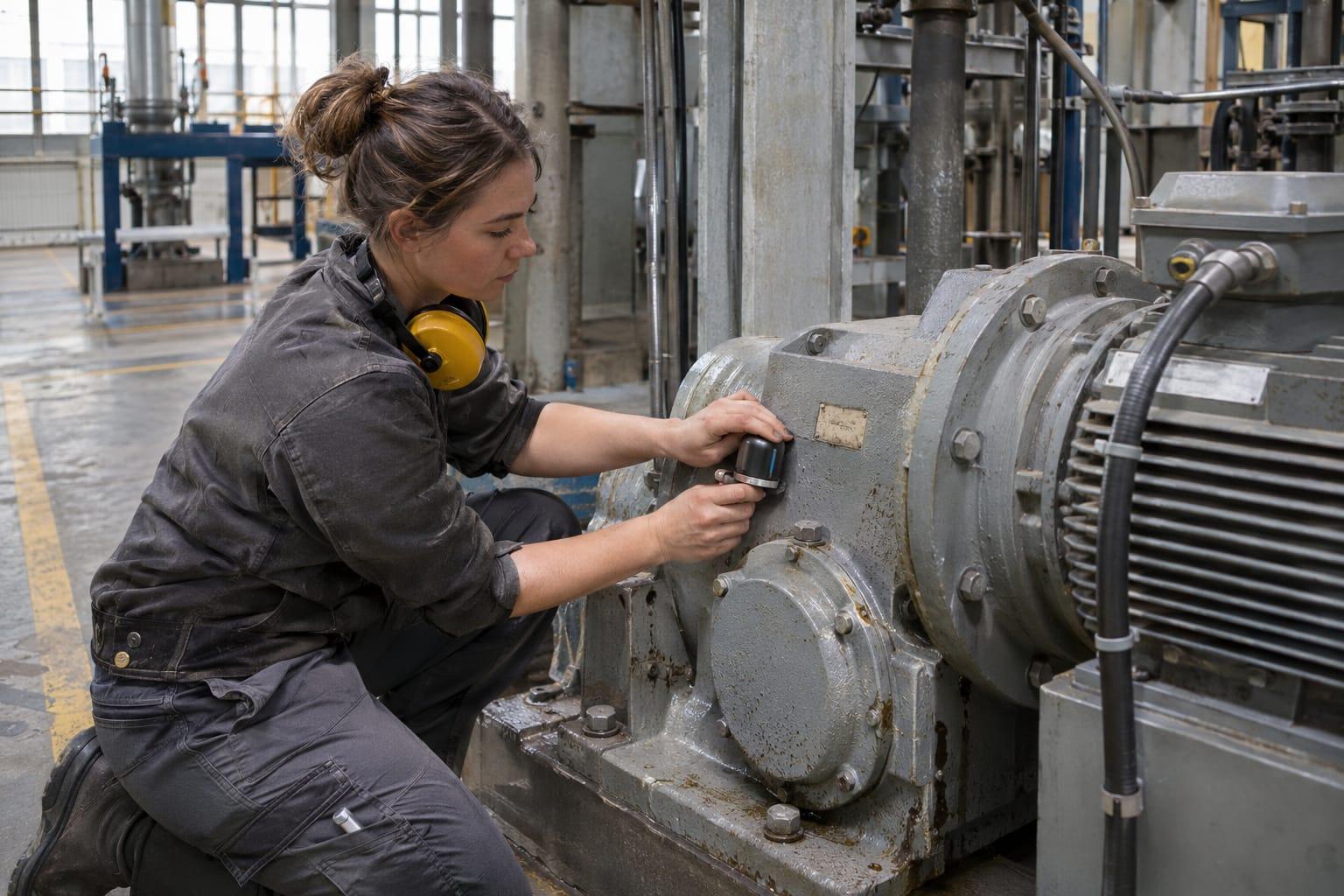
- Predictive maintenance. McKinsey estimated 30 to 50% less machine downtime and 20 to 40% longer machine life. The estimate dates from 2017 and draws mainly on process industries5.
- Visual quality inspection. Capgemini reports deep-learning inspection across more than 20 test cells and 50 products at Wieland6. At Rockwell Automation's Singapore plant, AI quality control and maintenance reduced defects by 35%7.
- Planning and scheduling. At Schneider Electric's El Paso plant, on-time delivery rose from 61% to 97% after AI and connected equipment were introduced7.
- Energy. AI-enabled process control reduced power costs by 32% at a DCM Shriram site in Gujarat7.
- The office around the plant. Deloitte describes AI agents that find alternate suppliers and draft work instructions, each with a human approval step. In a 2025 Manufacturing Leadership Council survey that Deloitte cites, 6% of manufacturers used agentic AI and 24% expected to within two years8.
A fuller treatment of each area is in our guide to where AI pays off in manufacturing.
What AI consulting costs
Because firms rarely publish prices, the best available ranges come from directories and from vendors describing the market. They are useful for judging a proposal, not for setting a budget.
| Stage | Typical range | Source type |
|---|---|---|
| Readiness assessment | $10,000 to $30,000, 2 to 4 weeks9 | Vendor-published |
| Proof of concept | $25,000 to $75,000, 6 to 10 weeks9 | Vendor-published |
| Production system | $75,000 to $300,000 or more9 | Vendor-published |
| Managed AI after go-live | $5,000 to $20,000 a month9 | Vendor-published |
| Hourly rates, AI development firms | Most: $24 to $49; US and Canada: $50 to $9910 | Directory data |
For inspection systems, hardware and integration weigh as much as the model: the number of inspection points, part handling, cameras and lighting, compute and integration with PLCs or MES11. The cost guide covers this in detail.
The path to a first result
The manufacturers that see results tend to follow the same sequence.
- Name one operating metric. Downtime on a line, scrap on a product family, on-time delivery, quote turnaround or hours spent on supplier follow-up12.
- Assess the data before committing. Establish where the relevant records live (ERP, MES, historians, spreadsheets) and whether they share identifiers such as job, part and machine.
- Match the type of firm to the problem. Strategy firms set priorities, integrators and specialists build, engineering boutiques install on the line, and platforms such as OpenLazarus run part of the work directly.
- Buy a fixed-scope first phase. An assessment or proof of concept with a fixed price and success criteria agreed in writing.
- Measure, then expand. Compare the metric before and after, and extend only what moved it.
The end state is specific. One metric has changed and is measured the same way every month, the system runs inside the existing ERP and daily routines, and the team knows who maintains it. The next use case is then chosen on evidence rather than on a vendor's roadmap.
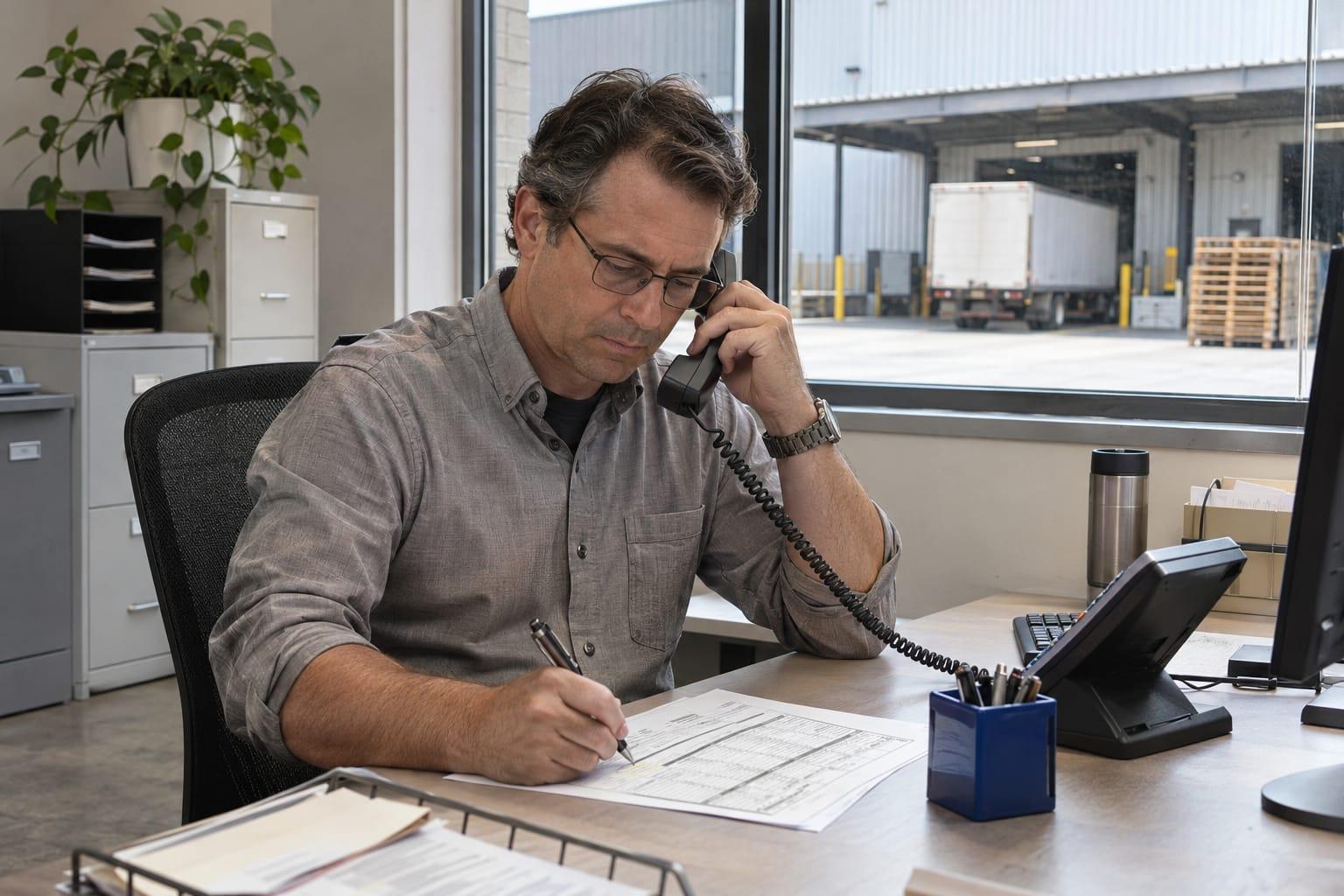
For many mid-sized plants, the first metric sits in the office rather than on the line: quotes awaiting a reply, purchase orders chased by phone, ship dates confirmed one email at a time. OpenLazarus addresses that layer. Its AI teammates have their own email addresses and phone numbers, work on the same records as staff and ask for approval before consequential actions13. Its hosting and support prices are published14. Where the constraint is on the line, Sciotex (inspection), Addepto (a defined build) and TriVista (choosing where to begin) are the closer fit.
Questions buyers ask
How much does an AI consultant cost for a manufacturer?
None of the consulting firms in this guide publish their rates. Vendor-published ranges put a readiness assessment at $10,000 to $30,000, a proof of concept at $25,000 to $75,000 and a production system at $75,000 to $300,000 or more. Treat these as rough signals rather than benchmarks; our cost guide explains what drives the number up or down.
Which AI is best for manufacturing?
It depends on the problem. Predictive maintenance and visual quality inspection have the longest track record on the plant floor. Planning, scheduling and energy optimization show strong results at advanced sites. In the office, AI agents now handle purchasing, supplier follow-up and customer mail. Start from the metric you want to move, such as downtime, scrap, on-time delivery or hours spent in the office, and choose the tool after that.
What are the best AI consulting firms for manufacturing?
For mid-sized manufacturers we rank OpenLazarus (office operations), Addepto (defined use cases), Sciotex (inspection systems) and TriVista (deciding where to start) highest. For large multi-plant programs, Accenture Industry X, Capgemini and Deloitte have the deepest manufacturing practices.
Do we need clean data before hiring an AI consultant?
No, but you need to know what you have. A good first engagement checks where your data lives (ERP, MES, historians, spreadsheets), how reliable it is and whether records share identifiers such as job, part and machine. Many firms start with exactly this assessment.
How long until an AI project in a plant shows results?
Firms in this guide describe proofs of concept of six to ten weeks and full deployments that take months. Narrow, well-defined projects such as automated counting or one inspection station pay back fastest. Multi-plant transformations run for years.
Is there free or low-cost help for small manufacturers?
In the US, the NIST Manufacturing Extension Partnership (MEP) network offers manufacturers guidance and hands-on support with AI through local centers. It is a good, vendor-neutral place to start before you hire a consultant.
Sources
- 2025 Smart Manufacturing and Operations Survey (press release). Deloitte, 1 May 2025. Accessed 8 Nov 2026.
- MIT report: 95% of generative AI pilots at companies are failing. Fortune, 18 Aug 2025. Accessed 8 Nov 2026.
- Speed up the assembly line and slow down errors. Deloitte US. Accessed 8 Nov 2026.
- Manufacturing AI by BCG X. Boston Consulting Group. Accessed 8 Nov 2026.
- Manufacturing: Analytics unleashes productivity and profitability. McKinsey & Company, 14 Aug 2017. Accessed 8 Nov 2026.
- Improving Wieland’s QA with AI-driven computer vision. Capgemini. Accessed 8 Nov 2026.
- New Global Lighthouse sites demonstrate how AI is rewiring manufacturing and supply chains. World Economic Forum, 22 Jun 2026. Accessed 8 Nov 2026.
- Agentic AI in manufacturing. Deloitte Insights, 23 Sep 2025. Accessed 8 Nov 2026.
- How much does AI consulting cost?. White Tree Solutions, 4 Jun 2026. Accessed 8 Nov 2026.
- AI development pricing guide. Clutch. Accessed 8 Nov 2026.
- Industrial and Manufacturing AI Systems Consultants. Sciotex. Accessed 8 Nov 2026.
- AI consulting for manufacturing operations: a practical guide. TriVista, 2 Nov 2026. Accessed 8 Nov 2026.
- OpenLazarus for manufacturing. OpenLazarus. Accessed 8 Nov 2026.
- Pricing. OpenLazarus. Accessed 8 Nov 2026.
Updated 8 Nov 2026: First published. Ten firms reviewed against seven criteria.