Where AI pays off in manufacturing, with the numbers behind it
Six places AI has produced measured results in manufacturing, what each one needs and how much weight to give the published figures.
Contents
Published AI results in manufacturing come from three kinds of source: consulting firms describing their own work, the World Economic Forum's Lighthouse network of advanced plants, and surveys. All three are useful, but none of them describes a typical plant. Read the numbers below as what is possible, not as what to expect.
Adoption today
In Deloitte's 2025 survey of 600 large US manufacturers, 29% used AI or machine learning at facility or network scale, and 23% were piloting it. 24% had deployed generative AI at that scale, and 38% were piloting it1. The World Economic Forum says AI "is moving from isolated pilots to a core operating capability" across its 238 Lighthouse sites2.
Predictive maintenance
Sensors on motors, gearboxes and pumps feed models that flag a failure before it happens. McKinsey's often-quoted estimate is 30 to 50% less machine downtime and 20 to 40% longer machine life. It dates from 2017 and comes mostly from process industries3.
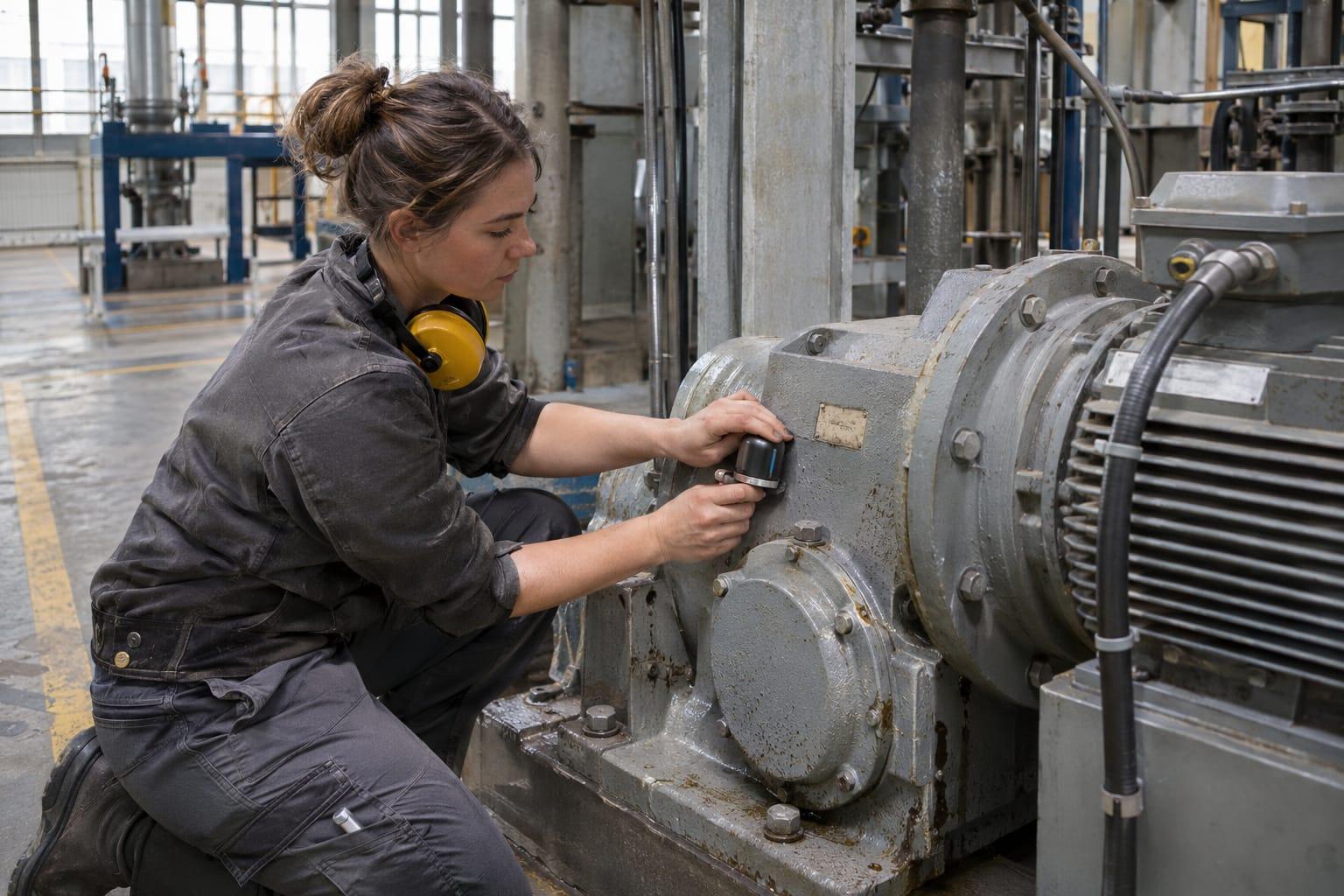
What it needs: sensor data with enough history, a maintenance log that records failures consistently and a maintenance team that will act on the alerts.
Visual quality inspection
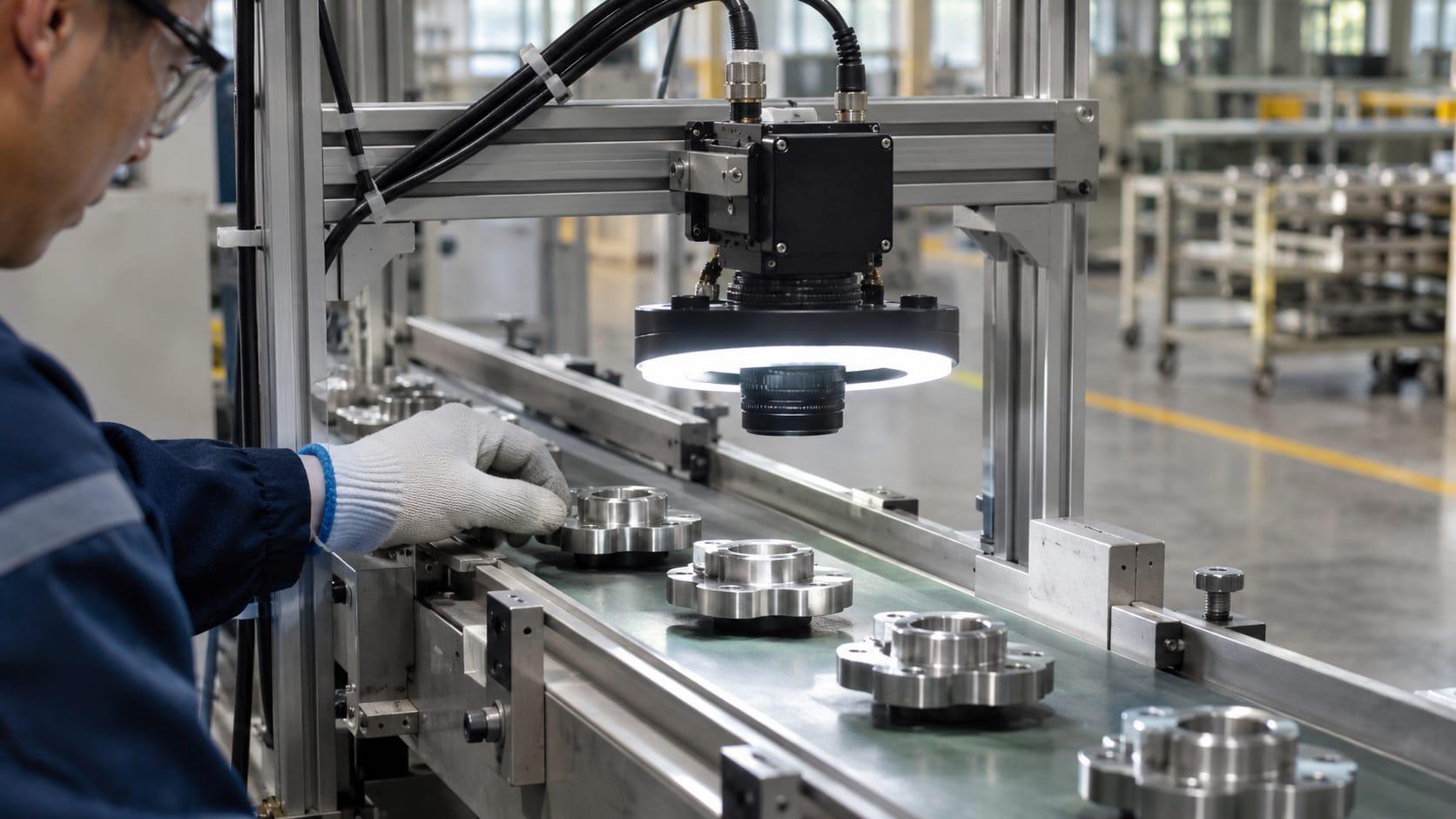
Cameras and deep-learning models inspect parts on the line. Capgemini reports that its system for Wieland inspects reflective metal parts across more than 20 test cells and 50 products4. At Rockwell Automation's Singapore plant, AI quality control and maintenance cut defects by 35% and raised units per person-hour by 43%2.
What it needs: stable lighting and part presentation, labelled examples of defects and integration with the PLC or MES so that rejects are actually removed. Sciotex estimates payback of 7 to 12 months for vision inspection systems5. That is the firm's own estimate.
Process quality and scrap
AI applied to process data can find the conditions that cause scrap. For an aerospace parts maker it does not name, Deloitte linked CNC sensor data, SAP and inspection results. It reports more than $150 million less in scrap-related costs6. Tredence reports 17% less work-in-process scrap for an aluminium producer it does not name7.
Planning, forecasting and scheduling
At Schneider Electric's El Paso plant, AI and connected equipment raised on-time delivery from 61% to 97% and cut lead times by up to 35%. At Unilever's Haridwar site, AI-enabled planning and sourcing cut response times by 72%2.
Energy
AI-enabled process control cut power costs by 32% at a DCM Shriram site in Gujarat2. Accenture reports a "tangible reduction in thermal energy consumption" at Unilever's Haldia plant8.
The office around the plant
The newest area is not on the plant floor. Deloitte describes AI agents that find alternate suppliers when parts run short, draft work instructions from CAD and bills of materials, and replan a line when a machine fails, each with a human approval step9. In MIT's 2025 study of enterprise AI, the biggest returns came from back-office automation, though the study covers all industries10.
This is the work OpenLazarus is built for: AI teammates with their own email and phone that handle quotes, purchasing and supplier follow-up alongside your ERP11. It has no published manufacturing case studies yet.
Choosing the first use case
Pick the first use case that has
- a metric you already measure and care about;
- data that exists today, or sensors you can add quickly;
- a team that will act on the result;
- a narrow scope that one firm can deliver in a quarter.
When you have a candidate, compare the firms that do this work, or read what it will cost.
Questions buyers ask
What is the most common use of AI in manufacturing?
Predictive maintenance and visual quality inspection are the most established on the plant floor. Planning, forecasting and scheduling are growing quickly, and agent-based automation of office work such as purchasing is the newest area.
Which manufacturing AI use case pays back fastest?
Narrow, well-defined problems pay back fastest. One inspection firm estimates payback of a few weeks for automated counting and 7 to 12 months for vision inspection; office automation can show results quickly because it needs no hardware. Your own data and volumes decide the real answer.
Sources
- 2025 Smart Manufacturing and Operations Survey (press release). Deloitte, 1 May 2025. Accessed 8 Nov 2026.
- New Global Lighthouse sites demonstrate how AI is rewiring manufacturing and supply chains. World Economic Forum, 22 Jun 2026. Accessed 8 Nov 2026.
- Manufacturing: Analytics unleashes productivity and profitability. McKinsey & Company, 14 Aug 2017. Accessed 8 Nov 2026.
- Improving Wieland’s QA with AI-driven computer vision. Capgemini. Accessed 8 Nov 2026.
- Industrial and Manufacturing AI Systems Consultants. Sciotex. Accessed 8 Nov 2026.
- Speed up the assembly line and slow down errors. Deloitte US. Accessed 8 Nov 2026.
- Industrial AI & Manufacturing Analytics. Tredence. Accessed 8 Nov 2026.
- Unilever scales digital twins across global manufacturing network with Accenture. Accenture Newsroom, 16 Jun 2026. Accessed 8 Nov 2026.
- Agentic AI in manufacturing. Deloitte Insights, 23 Sep 2025. Accessed 8 Nov 2026.
- MIT report: 95% of generative AI pilots at companies are failing. Fortune, 18 Aug 2025. Accessed 8 Nov 2026.
- OpenLazarus for manufacturing. OpenLazarus. Accessed 8 Nov 2026.
Updated 8 Nov 2026: First published.